Cloud Computing Guide: Must-Have Big Data Analytics Tips & Strategies
In today’s technology-driven landscape, a cloud computing guide is essential for businesses looking to harness the power of big data analytics. As organizations generate and collect massive volumes of data daily, the need to process, analyze, and derive actionable insights efficiently cannot be overstated. Cloud computing offers scalable and flexible platforms that are uniquely suited for big data analytics, allowing companies to unlock new opportunities and maintain a competitive edge.
This article dives into must-have tips and strategies that leverage cloud computing to enhance big data analytics initiatives. Whether you’re a startup or an established enterprise, these insights will help you optimize your analytics processes, improve decision-making, and maximize value from your data assets.
Understanding Big Data Analytics in the Cloud
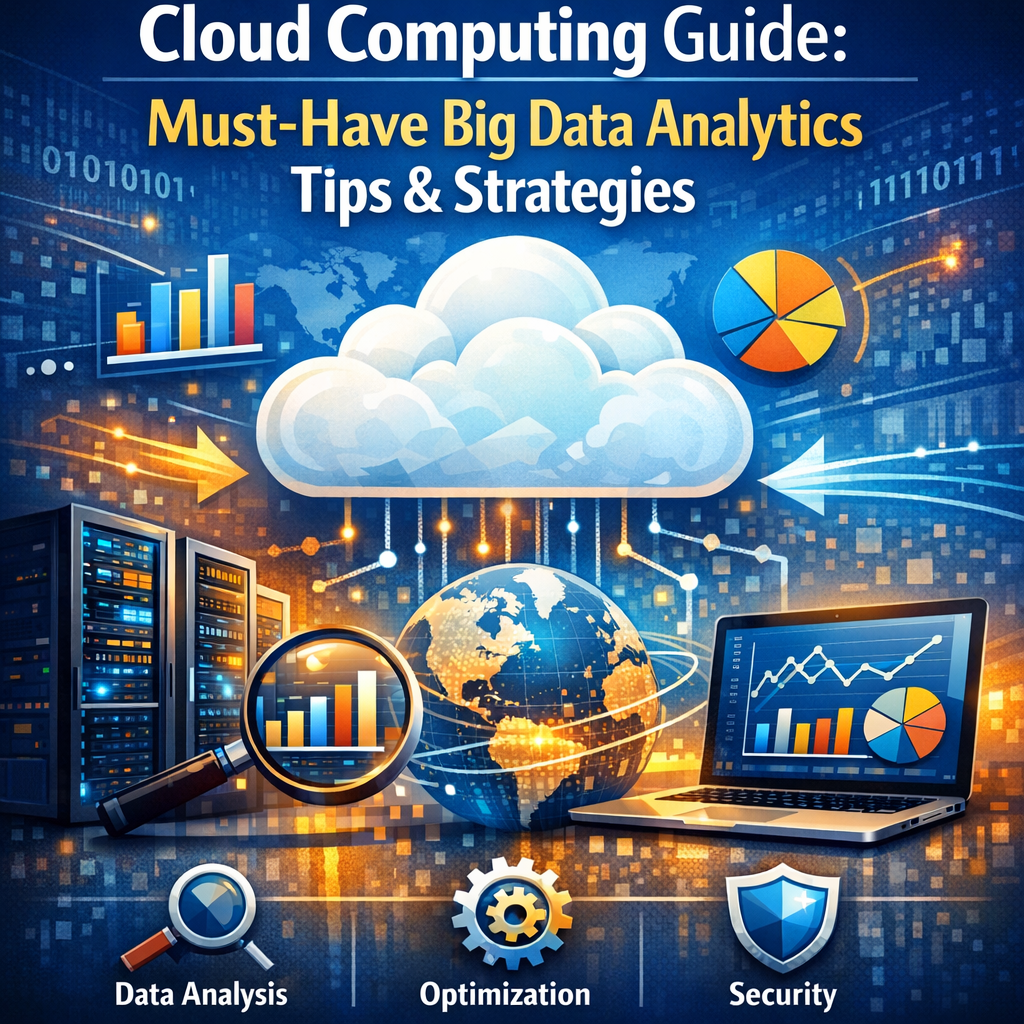
Before delving into tips and strategies, it is vital to understand why cloud computing and big data analytics go hand-in-hand. Big data analytics involves examining large, diverse data sets to uncover hidden patterns, correlations, and trends. Traditional on-premises infrastructure often falls short in providing the scalability and cost-efficiency required for such computationally intensive workloads.
Cloud platforms such as Amazon Web Services (AWS), Google Cloud Platform (GCP), and Microsoft Azure offer:
– Elastic compute resources that scale automatically based on demand
– Storage solutions optimized for unstructured and structured data
– Advanced analytics and machine learning tools integrated within the ecosystem
– Pay-as-you-go pricing to reduce upfront investments and operational costs
The cloud enables organizations to tackle big data challenges with agility, innovation, and lower risk.
Essential Tips for Successful Big Data Analytics in Cloud Computing
1. Define Clear Objectives and Data Strategy
A successful big data project starts with clearly defined goals. Without understanding the business problem you aim to solve or the insights you want to uncover, big data analytics becomes directionless.
– Identify specific use cases where analytics can drive value.
– Determine which data sources are necessary and assess data quality.
– Align your big data strategy with your overall business objectives.
2. Choose the Right Cloud Service Model
Cloud computing offers various service models: Infrastructure as a Service (IaaS), Platform as a Service (PaaS), and Software as a Service (SaaS). Selecting the optimal model depends on your analytics needs and in-house expertise:
– IaaS provides raw infrastructure for custom solutions but requires technical know-how.
– PaaS offers ready-to-use analytics platforms, reducing setup complexity.
– SaaS delivers fully managed analytics applications for quick deployment.
For most organizations, PaaS or hybrid solutions strike the perfect balance between flexibility and ease of use.
3. Leverage Cloud-Native Big Data Tools
Cloud providers offer specialized big data analytics tools optimized for their environments. For instance:
– AWS provides Amazon EMR for scalable Hadoop and Spark clusters.
– GCP offers BigQuery, a serverless data warehouse with lightning-fast SQL queries.
– Azure includes Azure Synapse Analytics integrating data warehousing and big data analytics.
Using these cloud-native services allows seamless integration, scalability, and cost-effectiveness.
4. Prioritize Data Security and Compliance
With increased data volume and cloud migration, security becomes a top concern. Protecting sensitive information while complying with regulations such as GDPR and HIPAA is non-negotiable.
– Implement robust encryption for data at rest and in transit.
– Use identity and access management (IAM) to control permissions.
– Regularly audit data usage and set up anomaly detection to identify breaches.
5. Optimize Data Storage and Processing Costs
While the cloud offers cost savings, unoptimized use can lead to ballooning bills. Efficient data storage and processing strategies help control costs:
– Use tiered storage, archiving data that is rarely accessed.
– Employ data partitioning and compression to reduce query costs.
– Schedule resource usage to avoid paying for idle capacity.
Proven Strategies to Maximize Big Data Insights
Adopt Real-Time Analytics and Streaming Data
The value of big data analytics dramatically increases when insights are delivered in near real-time. Cloud platforms support streaming data ingestion and analysis using tools like Apache Kafka, Amazon Kinesis, or Azure Event Hubs. This enables faster decision-making and responsiveness to market changes.
Invest in Skilled Data Talent and Automation
Cloud automation tools can streamline big data analytics workflows, but human expertise remains crucial. Hiring skilled data scientists, engineers, and architects ensures your analytics initiatives are well-designed and impactful. Additionally, train your team to use cloud analytics tools effectively.
Integrate Machine Learning and AI
Machine learning (ML) integrated with big data analytics uncovers deeper patterns and predictive insights. Cloud platforms provide built-in ML services such as Amazon SageMaker and Google AI Platform that allow you to build, train, and deploy models at scale.
Continuously Monitor and Refine Analytics Processes
Big data analytics is an ongoing process. Establish monitoring dashboards to track performance, accuracy, and data pipeline health. Use feedback to refine models, clean data, and optimize queries.
Final Thoughts
A comprehensive cloud computing guide for big data analytics equips businesses with strategies to unlock the full potential of their data. By clearly defining objectives, leveraging cloud-native tools, prioritizing security, and adopting real-time analytics and machine learning, organizations can transform raw data into decisive, actionable insights. Embracing these tips and strategies will not only improve operational efficiency but also drive innovation and growth in today’s highly competitive environment.