It Infrastructure Guide: Must-Have Machine Learning Basics for Best Performance
In today’s fast-evolving digital landscape, understanding the essentials of machine learning within the broader framework of IT infrastructure is crucial for organizations aiming to leverage data-driven insights effectively. This it infrastructure guide explores the fundamental machine learning basics that every IT professional should grasp to ensure optimal performance, scalability, and reliability of their systems.
Understanding the Role of Machine Learning in IT Infrastructure
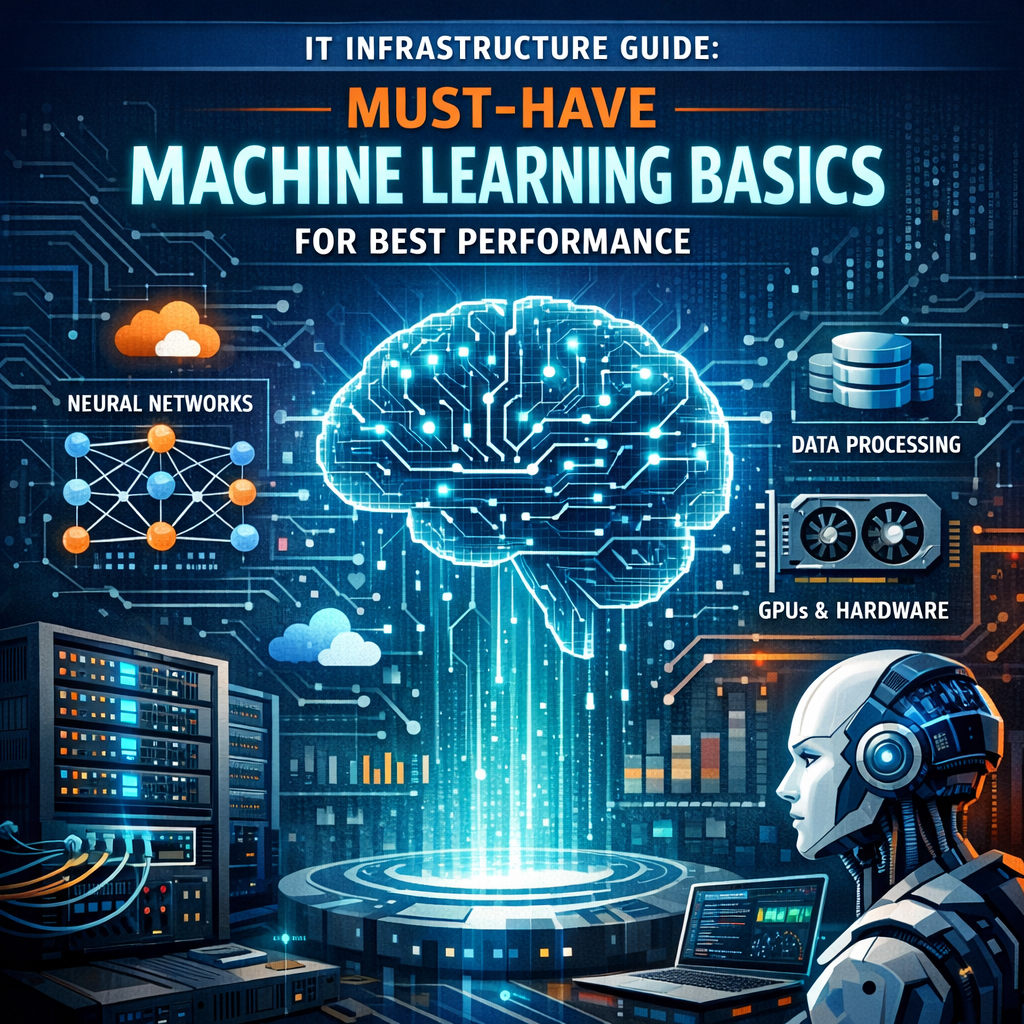
Machine learning (ML) has rapidly become a cornerstone of modern IT strategies. It enhances automation, enables predictive analytics, and drives improved decision-making. However, to realize these benefits, organizations need a well-optimized IT infrastructure tailored to ML workloads.
Machine learning models are computationally intensive, requiring specialized hardware and software environments. From data collection and preprocessing to training and deployment, each stage depends heavily on robust IT infrastructure components that support speed, scalability, and fault tolerance.
Key Components of an IT Infrastructure Guide for Machine Learning
1. Data Storage and Management
At the heart of any machine learning system is data. The quality and volume of data available for training directly impact model accuracy and performance.
– Scalable Storage Solutions: Machine learning projects often involve large datasets ranging from hundreds of gigabytes to petabytes. Distributed storage systems like Hadoop HDFS or cloud-based solutions such as Amazon S3 provide the scalability needed.
– Data Governance: Proper indexing, data quality checks, and metadata management are essential for smooth data access and preparation.
– Real-Time Data Pipelines: For applications requiring real-time predictions, infrastructure must support fast data ingestion and stream processing, using technologies like Apache Kafka or AWS Kinesis.
2. Compute Resources for Model Training
Training machine learning models demands significant computational power, often involving complex mathematical operations on large matrices.
– High-Performance CPUs and GPUs: GPUs, with their parallel processing capability, dramatically accelerate training times for deep learning models. Tensor Processing Units (TPUs) are alternatives for highly optimized workloads.
– Distributed Computing: For very large datasets or models, distributed training across multiple machines can reduce time to market.
– Elastic Compute: Cloud platforms enable flexible resource allocation, allowing organizations to scale compute resources up or down based on training needs, reducing cost and improving efficiency.
3. Networking and Latency Considerations
Fast data transfer between storage and compute nodes minimizes training bottlenecks.
– Low-Latency Networking: High-speed interconnects like InfiniBand or 10/40 Gbps Ethernet are vital in reducing data movement delays.
– Edge Computing: In some cases, deploying ML models closer to data sources (e.g., IoT devices) reduces latency and bandwidth usage.
4. Software Frameworks and Deployment Platforms
An it infrastructure guide cannot ignore the software stack that underpins machine learning workflows.
– Popular Frameworks: TensorFlow, PyTorch, and Scikit-learn provide comprehensive tools for building and training models.
– Containerization: Tools like Docker and Kubernetes enable consistent environments, making it easier to deploy and scale models across different infrastructure setups.
– Model Serving: Platforms such as TensorFlow Serving or AWS SageMaker handle inference workloads efficiently, ensuring models deliver predictions in real-time or batch modes.
Best Practices for Optimizing Machine Learning Performance in IT Infrastructure
Efficient Resource Utilization
Maximizing hardware usage without compromising performance is a challenging balance. Automating resource management, leveraging spot instances in the cloud, and implementing mixed-precision training are strategies that enhance efficiency.
Robust Monitoring and Maintenance
Continuous monitoring of model performance and infrastructure health is necessary. Tools like Prometheus and Grafana help in tracking system metrics, enabling timely interventions in case of failures or degradation.
Security and Compliance
Machine learning systems often process sensitive data. Securing data, models, and infrastructure components against unauthorized access is paramount. Encryption, role-based access control, and compliance with regulations (like GDPR) are critical measures.
Future Trends in IT Infrastructure for Machine Learning
The IT landscape supporting machine learning continues to evolve:
– AI-Specific Hardware: Beyond GPUs and TPUs, new chips designed explicitly for machine learning workloads are emerging, promising even faster processing.
– Federated Learning: This approach allows decentralized training across multiple devices, reducing data transfer needs and enhancing privacy.
– AutoML and Infrastructure Automation: Increased automation in model training and infrastructure provisioning reduces operational complexity and speeds up deployment.
Conclusion
Successfully integrating machine learning into an organization’s IT environment demands a clear understanding of the underlying infrastructure requirements. This it infrastructure guide highlights the critical components — from scalable storage and powerful compute resources to networking and software frameworks — that form the foundation for high-performance ML solutions. By following best practices and staying abreast of technological advances, businesses can build resilient, efficient, and secure machine learning frameworks that unlock the full potential of their data assets.